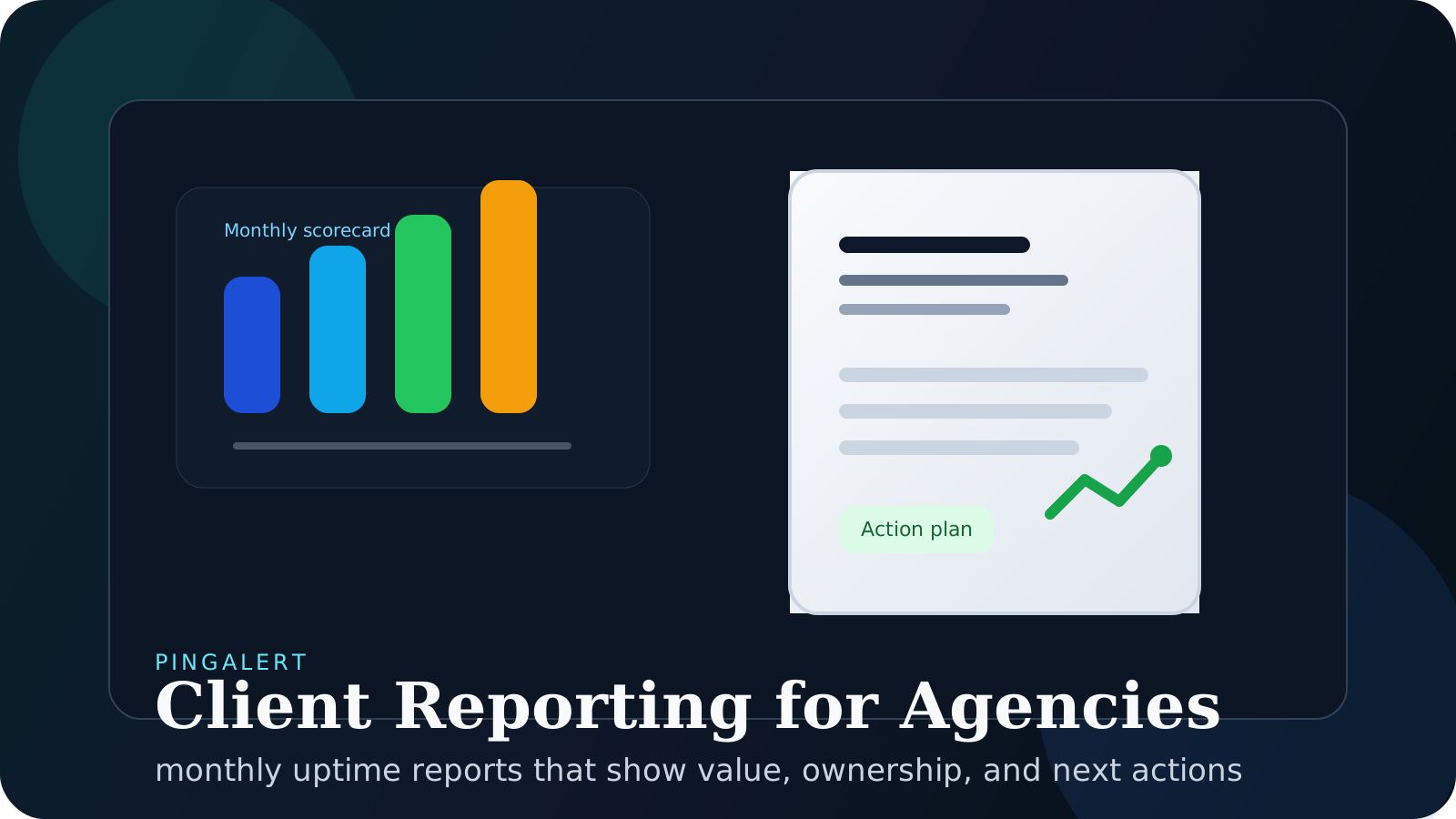
Clients rarely want a raw uptime export. They want a short, confident answer to three questions: what broke, how fast did you respond, and what are you doing so next month is calmer.
That is why the best agency reporting turns monitoring data into a narrative, not a dashboard dump. When the report is clear, it reinforces value. When it is noisy or generic, it makes your work harder to defend.
Why Raw Dashboards Do Not Retain Clients
Most monitoring dashboards are built for operators, not buyers.
Common reporting mistakes include:
- Blended averages that hide risk: One global uptime number can conceal repeated failures on the client's most important service.
- No business context: A chart shows downtime, but not whether it affected leads, revenue, or customer support volume.
- Too much detail, not enough ownership: The client sees data but not what your team improved.
- No forward motion: Reports look backward only, so every review feels like a recap instead of a plan.
Good agency reporting should make reliability legible in under five minutes.
The Monthly Uptime Report Structure Agencies Should Use
Use the same five-section structure for every client.
1. Executive Summary
- Did reliability improve, hold steady, or worsen?
- Which business-critical services had risk?
- What should the client know first?
2. Availability by Critical Service
Break uptime out by service, not just by workspace:
- Website or landing pages
- Login and auth
- Checkout or lead forms
- API or integration endpoints
This helps clients connect reliability to actual business operations.
3. Incident Response and Communication
Show how the team performed during visible incidents:
- Number of material incidents
- Longest incident duration
- MTTR trend
- Time to first client update
- Whether communication cadence was maintained
This is where agency incident response becomes a measurable service quality dimension.
4. Improvements Shipped
Clients want to see what changed because of the data:
- New monitors added
- Thresholds tuned
- Escalation paths cleaned up
- Status page or communication workflow improvements
5. Next-Month Actions
End every report with a clear plan:
- Top risks still open
- Owner for each improvement
- Expected completion window
That turns the report into a retained-services artifact, not just a retrospective.
Metrics Clients Actually Understand
If you need a short scorecard, start here:
- Uptime by critical service
- Incident count with longest outage duration
- MTTR for customer-visible issues
- Time to first client update
- Repeat incident rate
These metrics travel well from monthly reviews into quarterly business reviews and renewal discussions.
A Simple One-Page Narrative Template
Use this pattern for the first page of each report:
- This month reliability was: improving / stable / at risk
- Most important service outcome: for example, checkout uptime improved and no major incidents impacted sales
- Most important incident lesson: for example, login alerts were too noisy and thresholds were corrected
- Actions completed: monitors added, routing updated, status communication tightened
- Actions next month: top two risk-reduction items and owners
The appendix can hold raw data. The first page should hold the story.
Reader Questions, Answered
How long should a monthly agency uptime report be?
Usually one to two pages plus an appendix. The client should be able to understand the summary and next actions quickly without reading every metric table.
Should agencies include incidents that had no client-visible impact?
Include them only if they reveal a meaningful risk or a corrective action. Otherwise they belong in an internal operations review, not the client summary.
How often should agencies review uptime performance with clients?
Monthly operational reporting is a strong baseline, with a deeper quarterly review for trends, recurring risks, and scope planning.
Wrap Up
Strong client reporting helps agencies prove reliability work in the language clients actually buy: stability, response quality, and visible ownership of the next fix.
Ready to turn uptime monitoring into cleaner monthly reporting and stronger renewal conversations?
Related guides:
- Agency alert fatigue in website monitoring
- Website monitoring for agencies
- Agency incident response playbook
- MSP SLA reporting for uptime monitoring
- White-label status pages for agencies