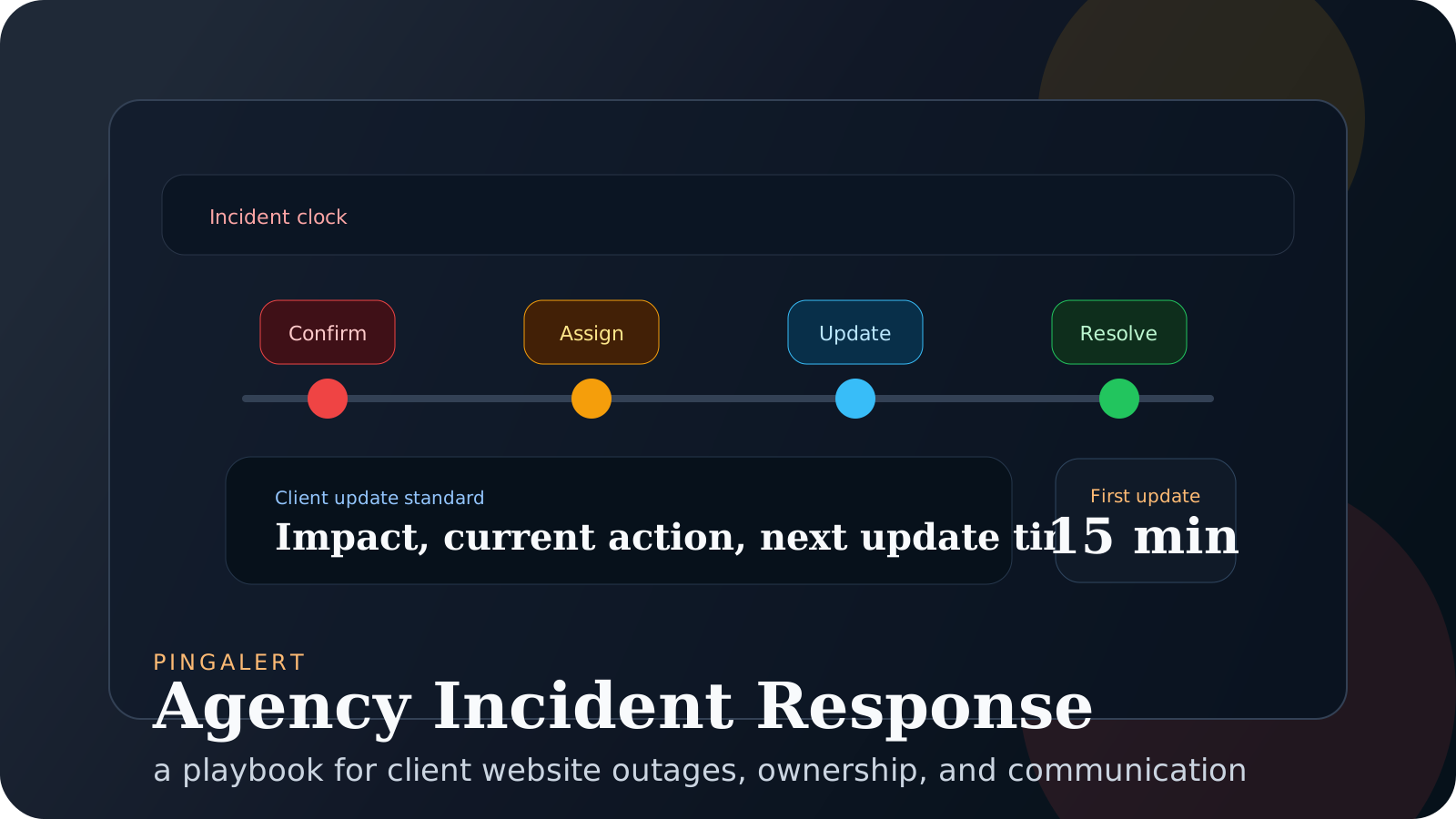
Agency incident response is not just technical triage. During a client outage, your team is usually doing three jobs at once: confirming impact, coordinating responders, and keeping the client informed. When those three tracks drift apart, the incident feels worse than it actually is.
The agencies that handle outages well do not improvise the workflow every time. They standardize ownership, timing, and communication before the next client-facing incident starts.
Why Agency Incidents Need a Different Workflow
When an internal product team has an outage, the communication surface is usually one company and one customer base. Agencies work differently.
Agency incidents often involve:
- Multiple audiences: engineers, account managers, client stakeholders, and sometimes the client's customers
- Multiple channels: Slack, email, status pages, support tickets, and direct calls
- Shared responders: the same operations team may support several client environments
- Commercial risk: how you communicate can influence renewals as much as how quickly you fix the issue
That is why agency response needs an operating playbook, not just a monitoring tool.
The First 15 Minutes: Four Actions That Prevent Chaos
The first 15 minutes decide whether the incident stays controlled.
- Confirm the issue and scope quickly: Use a second check, another region, or another path to avoid responding to a false positive.
- Assign two owners immediately: one incident lead for technical coordination and one client-facing owner for updates.
- Publish the first update fast: Share what is affected, who may be impacted, and when the next update will be posted.
- Control the notification path: Suppress duplicate alert noise and route responders through one clear communication channel.
If you wait for a perfect root cause before updating the client, you usually create more stress, not less.
The Communication Clock Clients Actually Judge
Clients remember silence more clearly than stack traces.
For customer-visible incidents, a practical agency standard is:
- First update within 15 minutes of confirming material impact
- Every update includes the next update time
- Ongoing cadence every 20 to 30 minutes for major incidents
- Resolution summary after recovery, even if the root cause analysis comes later
The message structure should stay simple:
- What is affected
- Who is impacted
- What your team is doing now
- When the next update will arrive
This is where white-label status pages for agencies create leverage. They give the client one authoritative place to follow the incident instead of chasing updates across channels.
How To Separate Technical Response From Client Response
Agencies often make one of two mistakes:
- Everyone talks to the client and the message drifts
- Nobody talks to the client until the engineers are finished
Use a cleaner split:
- Incident lead: owns diagnosis, responder coordination, and recovery decisions
- Client-facing owner: owns updates, expectation-setting, and commercial context
- Account lead: joins only when the incident changes renewal risk, revenue impact, or scope discussions
This keeps engineering focused without letting the client experience go dark.
After the Fix: Follow-Through Is Part of the Service
Recovery is not the end of the incident for an agency. Trust usually depends on what happens next.
Close the loop with:
- A plain-language timeline
- The likely root cause or failure point
- The exact remediation that restored service
- What will change in monitoring, alerting, or process
- Any follow-up actions that will appear in the next monthly review
That last point matters. Agencies should connect outage learnings to client reporting for agencies, not leave them trapped in an internal Slack thread.
Reader Questions, Answered
Should agencies wait until they know the root cause before updating the client?
No. If the issue is materially affecting the client, publish impact and next-update timing first. Transparency about uncertainty is better than silence.
Who should own client communication during an outage?
One named client-facing owner. Engineering can supply details, but one person should own the outward message to keep it consistent.
Should every outage become a public status update?
Not every internal event, but any incident with material customer impact should have a clear client-facing communication path, whether that is a status page or a direct update workflow.
Wrap Up
Agency incident response succeeds when your team can do four things quickly: detect real issues, assign ownership, communicate clearly, and turn every outage into a stronger operating process.
Ready to pair fast detection with client-ready status communication and repeatable escalation workflows?
Related guides:
- Website monitoring for agencies
- White-label status pages for agencies
- Status page best practices for customer trust
- Client reporting for agencies